
Porcelain vs. Ceramic Tile: What Actually Matters
The porcelain-versus-ceramic debate is one of the most common questions we hear from GTA homeowners planning a bathroom renovation, and the answer is more nuanced than most guides suggest. Both are made from clay fired in a kiln, but porcelain is fired at a higher temperature, making it denser, harder, and less porous. For bathroom floors, porcelain is the stronger choice. Its low water absorption rate (less than 0.5 percent) means it handles the constant moisture exposure of a bathroom without degrading over time. It is also more resistant to chipping and cracking, which matters in a high-traffic household. Ceramic tile, however, is not a lesser product. It is easier to cut during installation, comes in an enormous range of styles, and costs less per square foot. For bathroom walls and backsplashes where moisture exposure is less intense, ceramic performs beautifully and gives you more budget to spend elsewhere. The real differentiator is the specific tile, not the category. A high-quality ceramic tile will outperform a cheap porcelain tile every time. Focus on the absorption rating, the thickness, and the manufacturer's warranty rather than the label alone.
Quartz vs. Marble Countertops: Beauty Meets Practicality
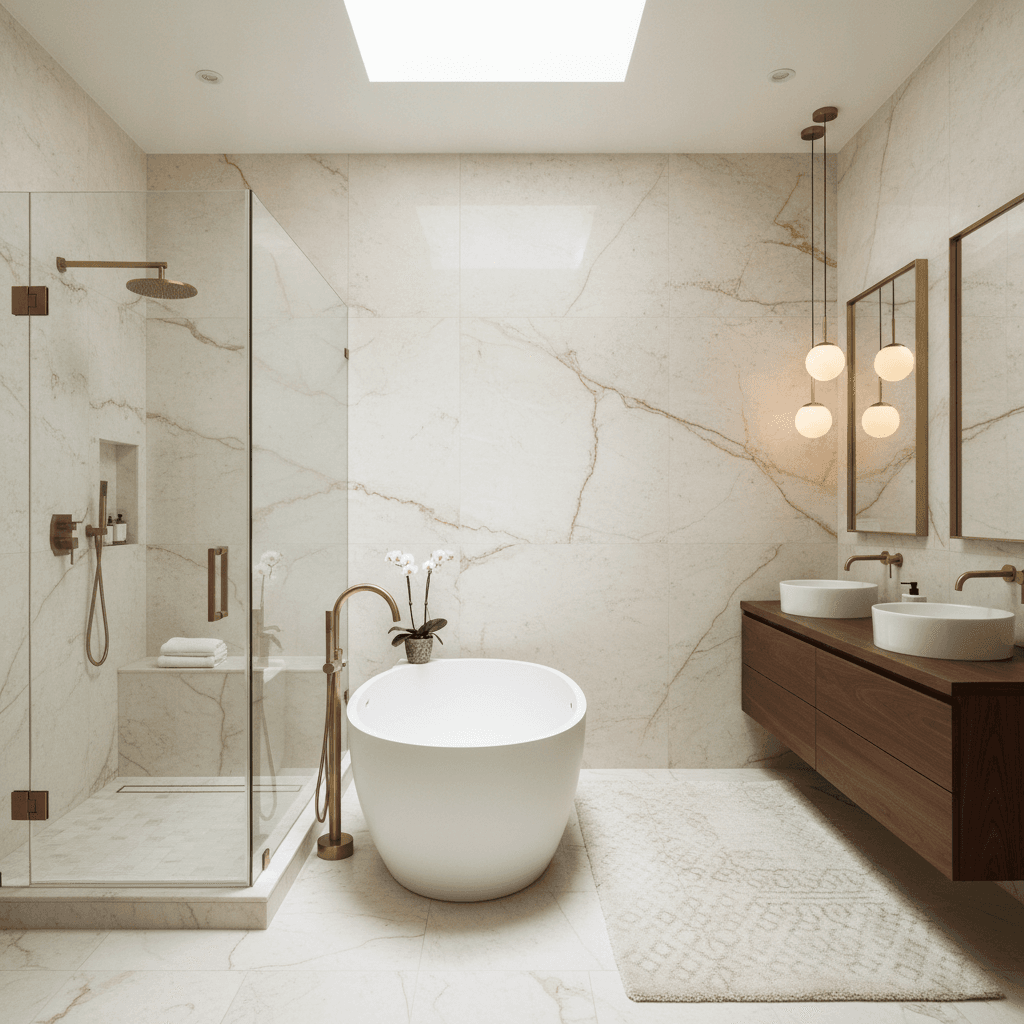
Marble vanity tops have an undeniable presence. The veining, the depth, the way light moves across the surface: there is nothing quite like natural stone. But marble is a calcite-based stone, which means it etches when exposed to acidic substances like toothpaste, certain cleaners, and even some soaps. It also requires periodic sealing to maintain its stain resistance. For a powder room or a primary ensuite where you control the environment and don't mind the maintenance, marble can be a stunning choice. Quartz, on the other hand, is engineered for performance. It is non-porous, requires no sealing, resists staining, and holds up to the daily demands of a family bathroom without special care. Modern quartz manufacturing has reached a point where the visual difference between quartz and natural marble is remarkably subtle. Brands now offer slabs with realistic veining, soft matte finishes, and warm colour tones that capture the look of Calacatta or Carrara marble without the maintenance commitment. For most GTA bathroom renovations, quartz delivers the right balance of aesthetics and durability. If your heart is set on marble, consider using it as an accent, a shower niche surround, or a feature wall, and use quartz for the high-use vanity top.
Glass vs. Acrylic Shower Enclosures
The shower enclosure sets the tone for the entire bathroom, and the choice between glass and acrylic comes down to priorities. Frameless glass enclosures are the current standard in premium GTA bathroom renovations. They create an open, seamless look that makes the bathroom feel larger, and they showcase your tile work rather than hiding it behind a frame. Tempered glass panels are durable and safe, and with proper squeegee habits or a glass coating treatment, water spots are manageable. Semi-frameless options offer a similar aesthetic at a lower price point and are easier to install. Acrylic enclosures and surrounds fill a different role. They are cost-effective, lightweight, and fast to install, making them a practical choice for rental properties, secondary bathrooms, or budget-conscious renovations. Modern acrylic panels have improved significantly in appearance, and some products convincingly replicate tile or stone patterns. The limitation is longevity and feel: acrylic can yellow over time, scratches are more visible, and the material simply does not have the weight and presence of glass. For a primary bathroom that you want to feel like a retreat, glass is the right investment. For a basement apartment or guest bath, quality acrylic can look good and perform well at a fraction of the cost.
Flooring Options: Beyond the Basics
Bathroom flooring needs to handle water, humidity, temperature swings, and daily foot traffic without showing wear. Large-format porcelain tiles remain the gold standard for GTA bathrooms. Fewer grout lines mean a cleaner look and less maintenance, and the larger surface area makes small bathrooms feel more spacious. Tiles in the 12-by-24-inch or 24-by-24-inch range are the most popular, often laid in a staggered pattern for visual interest. Luxury vinyl plank and tile have earned a legitimate place in the conversation. Today's premium vinyl products are fully waterproof, comfortable underfoot, and available in wood and stone looks that are surprisingly convincing. They install quickly, are warm to the touch compared to ceramic, and can be a smart choice for bathrooms on upper floors where weight and sound transmission matter. Natural stone flooring, such as honed marble or limestone, brings unmatched character but requires more care. It must be sealed regularly, can be slippery when wet unless you choose a honed or textured finish, and costs more to install and maintain. If you choose natural stone, work with your contractor to select a slip-resistant finish and commit to the maintenance schedule.
Fixtures and Hardware: Matte Black vs. Brushed Nickel
The fixtures you choose tie the entire bathroom together, and the finish is as important as the function. Matte black fixtures have dominated GTA bathroom design for several years, and they continue to hold strong. The finish is bold, modern, and photographs beautifully. It pairs particularly well with white tile, light wood vanities, and concrete-look porcelain. The practical consideration with matte black is that water spots, fingerprints, and soap residue show more readily on dark finishes. If you choose matte black, expect to wipe down fixtures more frequently to keep them looking sharp. Brushed nickel and its close relative, brushed gold or champagne bronze, offer a warmer alternative. Brushed nickel is forgiving with water spots, complements a wide range of colour palettes, and has a timeless quality that won't feel dated in five years. Brushed gold brings warmth and richness without the high-maintenance shine of polished brass. The most important rule with fixtures is consistency. Choose one finish and carry it through every element: faucets, showerhead, towel bars, robe hooks, cabinet pulls, and even the drain cover. Mixing finishes can work in the hands of a skilled designer, but for most renovations, a unified finish creates the most polished result.